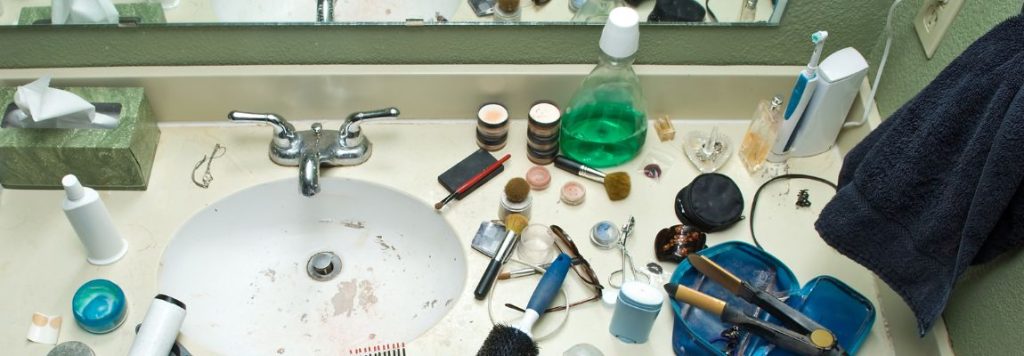
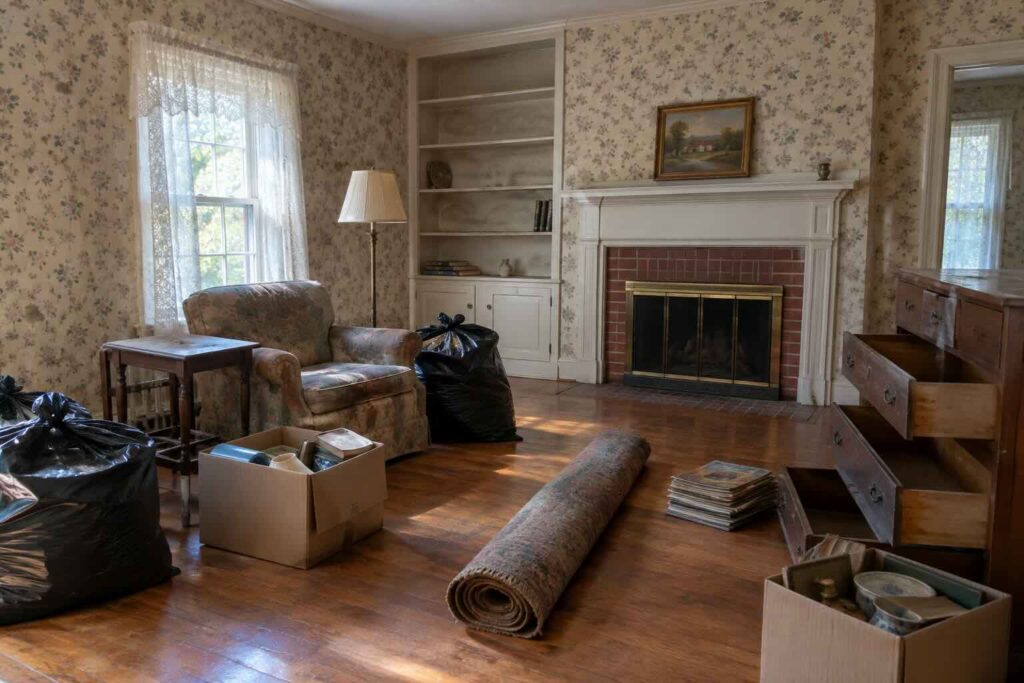
When a family needs estate cleanout services in Harford County, MD, the job usually involves much more than removing unwanted furniture and boxes. It often comes during a major life change—after the loss of a loved one, a move to assisted living, the transfer of an inherited home, or the need to get a property ready for sale.
Maryland Pickers provides estate cleanout services in Harford County, MD for families, executors, real estate professionals, landlords, and property owners who need practical help clearing a home without taking on every heavy, time-consuming part of the job themselves. You decide what stays, what goes to relatives, and what needs more review. We handle the lifting, loading, hauling, and final sweep-up once those decisions have been made.
An estate cleanout may involve one crowded room, a basement full of stored possessions, a detached garage, or an entire property with decades of furniture, boxes, appliances, household goods, and general clutter. No two situations look alike. A thoughtful plan makes the work more manageable and helps protect the belongings that matter most.
What Are Estate Cleanout Services?
Estate cleanout services remove unwanted belongings, furniture, appliances, household contents, and debris from a property after the owner has moved, passed away, downsized, or transferred the home to another party.
The work may take place in a single-family home, townhouse, apartment, condominium, rental property, senior living residence, garage, basement, attic, storage unit, shed, or outbuilding. In many cases, an estate cleanout includes several of these spaces at once.
A professional estate cleanout is different from ordinary trash pickup. Estate properties often contain a wide mix of materials, including large furniture, old appliances, family possessions, antiques, paperwork, electronics, tools, mattresses, renovation materials, outdoor equipment, and boxes that have not been opened in years.
The physical work can be demanding. Heavy sofas need to be carried through hallways. Old refrigerators may sit in a basement or garage. Boxes may be stacked behind furniture or on high shelves. A house may need to be cleared quickly before a closing date, contractor visit, property listing, or transfer of ownership.
Maryland Pickers handles the removal side of the process so families do not need to rent a truck, recruit friends, make repeated trips to disposal locations, or risk an injury moving bulky items. Our crew removes the items you identify, loads them into the truck, hauls them away, and sweeps the cleared work area when finished.
When Families Need Estate Cleanout Services in Harford County, MD
Estate cleanouts often arise at a time when people already have many decisions to make. The property may have emotional significance, legal requirements may be involved, and different family members may need time to review personal belongings.
Professional estate cleanout services in Harford County, MD can help create order when the property needs attention but the work feels too large to handle alone.
After the Death of a Loved One
Cleaning out a loved one’s home can be emotionally difficult, especially when the property contains a lifetime of possessions. Family members may need to sort through photographs, letters, heirlooms, jewelry, financial documents, furniture, collections, tools, and personal items before anything is removed.
There is no need to rush the sorting process. Important belongings are not always stored in obvious places. A family photo album may be inside a plain cardboard box. Legal documents may be tucked into a desk drawer. Jewelry, keys, or cash may be hidden in old furniture, closets, kitchen cabinets, filing boxes, or storage containers.
Once the family has reviewed the home and set aside the items they want to keep, Maryland Pickers can remove the unwanted materials. This allows relatives to focus on personal decisions rather than the physical strain of carrying furniture, loading trucks, and managing disposal.
During Senior Downsizing
Downsizing often involves years of accumulated household belongings. A parent or relative may be moving to a smaller home, an apartment, an assisted living community, or a senior living residence. Furniture that fit comfortably in a longtime family home may no longer fit the next residence.
The process can include decisions about bedroom furniture, dining sets, kitchen items, books, holiday decorations, collectibles, tools, hobby supplies, clothing, storage bins, and duplicate household items.
A downsizing cleanout works best when the family separates belongings into clear categories:
- Items moving to the next home
- Items being kept by relatives
- Items for donation or gifting
- Items that need a final decision
- Items ready for removal
You remain in control of those choices. We remove the materials you have decided not to retain.
Preparing an Inherited Home for Sale
An inherited home may need extensive work before it can be listed. Buyers, real estate agents, contractors, appraisers, and home inspectors need access to rooms, closets, basements, garages, utility areas, and outbuildings.
A clean, open property is easier to assess and easier to prepare for the market. Clearing excess belongings also allows you to identify repairs, water damage, outdated fixtures, pest concerns, flooring issues, wall damage, or other maintenance needs that clutter may have concealed.
Estate cleanout services can help prepare a home in Bel Air, Aberdeen, Fallston, Forest Hill, Havre de Grace, Abingdon, Edgewood, Joppa, Churchville, Jarrettsville, or elsewhere in Harford County for the next stage of ownership.
Clearing a Property After a Move
Sometimes an estate cleanout is necessary after someone has already moved. A family may take only essential belongings to a new residence, leaving furniture, boxes, appliances, garage items, basement storage, and household clutter behind.
This situation is common after a transition to assisted living, a move out of state, a relocation to be closer to family, or a sudden change in health or living arrangements.
The remaining property may contain more material than expected. A professional cleanout crew can remove the unwanted items from where they are located, whether that means the first floor, upper bedrooms, attic, garage, basement, shed, or storage area.
Handling a Rental Property or Tenant Turnover
Landlords and property managers sometimes need estate cleanout services after a tenant passes away, moves unexpectedly, leaves belongings behind, or vacates a property in poor condition.
Before removing anything, make sure you understand your legal responsibilities regarding abandoned property, tenant belongings, estate representatives, and required notice periods. Once the property is legally ready to be cleared, Maryland Pickers can remove furniture, household contents, bagged trash, appliances, mattresses, debris, and other unwanted materials.
A cleared property is easier to inspect, repair, clean, photograph, and prepare for the next tenant.
What Is Included in a Professional Estate Cleanout?
Estate cleanout services can be tailored to the property and the materials that need to be removed. Some customers need help with several large pieces of furniture. Others need a whole-house cleanout involving multiple rooms and storage areas.
We remove common household items and bulky materials from inside the property. You do not need to move them to the curb, driveway, garage door, or front lawn before the appointment.
Furniture Removal
Furniture is often the largest part of an estate cleanout. Large pieces can be difficult to move safely, particularly in older Harford County homes with narrow hallways, tight staircases, small landings, and low basement ceilings.
Common furniture items removed during an estate cleanout include:
- Sofas, loveseats, recliners, and chairs
- Dining tables, coffee tables, end tables, and desks
- Dressers, wardrobes, armoires, and chests of drawers
- Bed frames, headboards, box springs, and mattresses
- Bookcases, shelving units, cabinets, and entertainment centers
- Filing cabinets and office furniture
- Patio furniture and outdoor seating
- Old workbenches and non-built-in storage systems
Before a furniture removal appointment, check drawers, cabinets, cushions, desk compartments, and storage sections. Important papers, photographs, keys, jewelry, cash, and small family keepsakes can be easy to miss.
Appliances and Household Equipment
Estate properties often contain appliances that no one plans to keep. These may include refrigerators, freezers, washers, dryers, microwaves, dehumidifiers, air conditioners, stoves, dishwashers, and other household equipment.
An old appliance may be stored in a basement, garage, laundry room, shed, or utility area. Moving it without the right help can be difficult because of its weight, awkward shape, stairs, tight turns, and the need to protect floors and walls.
We can remove appliances along with furniture, boxes, electronics, and other household items as part of the larger estate cleanout.
Electronics and Outdated Devices
Homes often collect electronics over many years. A cleanout may include old televisions, computer monitors, printers, desktop computers, speakers, DVD players, stereo equipment, phones, cables, and outdated home-office equipment.
Before removing computers, phones, tablets, external hard drives, or other data-containing devices, review them carefully. If necessary, back up files and remove or securely erase personal data. Estate representatives should also check for financial records, passwords, tax information, account documents, and personal correspondence.
Basement, Attic, and Garage Contents
Storage areas are frequently the most time-consuming parts of estate cleanout services in Harford County, MD. Basements, attics, garages, sheds, and crawl spaces can hold belongings that have not been used or reviewed in decades.
These areas may contain:
- Cardboard boxes and plastic storage bins
- Holiday decorations and seasonal items
- Old books, magazines, records, and media
- Tools, hardware, workshop equipment, and lawn equipment
- Bicycles, sports gear, toys, and recreation items
- Exercise equipment
- Old carpet, flooring, paneling, and construction leftovers
- Paint cans, household chemicals, and maintenance materials
- Family keepsakes, files, photographs, and heirlooms
- Furniture that was moved out of the main living areas
A basement or garage may look like it needs to be emptied immediately, but these spaces deserve a careful review first. Set aside anything that may be meaningful, valuable, legally important, or intended for a family member.
General Household Clutter and Bulk Items
Estate cleanouts often include a large volume of everyday household materials that do not fit in normal trash collection. This can include bagged clutter, boxes, kitchen items, clothing, linens, old décor, broken furniture, shelving, rugs, lamps, household supplies, and bulky trash.
Maryland Pickers uses oversized trucks measuring 20 feet long, 8 feet wide, and 5 feet high. One full truck load equals approximately eight pickup-truck loads. That capacity makes a major difference when a property contains a mixture of furniture, boxes, appliances, and debris.
A Practical Estate Cleanout Plan
A well-planned estate cleanout reduces stress, prevents important items from being removed by mistake, and helps the project move forward in a logical order.
You do not need to organize the entire property perfectly before scheduling service. Still, a few preparation steps can protect personal belongings and make the removal process smoother.
Start With Documents and Personal Records
Before focusing on furniture, clothing, or general household items, look for documents that may be needed for legal, financial, personal, or estate-related reasons.
Review desks, filing cabinets, desk drawers, kitchen drawers, closets, lockboxes, bookshelves, storage bins, trunks, and old folders. Search through ordinary-looking boxes before assuming their contents are unimportant.
Set aside:
- Wills, trusts, deeds, titles, and property records
- Tax returns, insurance documents, and bank statements
- Birth certificates, passports, Social Security cards, and marriage records
- Military records, employment documents, and pension information
- Medical paperwork and prescription information
- Family photographs, letters, journals, albums, and genealogy records
- Keys, safe keys, garage door remotes, and vehicle keys
- Jewelry, coins, collectibles, and small valuables
- Digital devices, hard drives, phones, and computers
If you are serving as an executor or working with an estate attorney, follow the guidance you have received before removing personal records or potentially valuable property.
Give Family Members Time to Review Belongings
When several relatives are involved, establish a reasonable timeline for people to visit the property and identify items they would like to keep. This step can prevent misunderstandings and last-minute disagreements.
A simple approach is to use labeled areas or colored stickers. For example, one color can identify items reserved for a particular person, while another can mark belongings ready for removal. A separate “review” area is helpful for items that require more discussion.
Avoid making fast decisions about boxes marked with family names, old photographs, military materials, collectibles, handmade furniture, antiques, or personal papers. The item may not have monetary value, but it may hold meaning for someone in the family.
Sort Into Clear Categories
Once documents and sentimental items have been reviewed, divide the remaining property into categories. You do not need a complicated system.
A practical estate cleanout sorting plan includes:
- Keep: Items staying with the family or remaining in the property
- Share: Items reserved for relatives or friends
- Donate: Usable items you plan to give away
- Sell: Items you intend to sell through an estate sale, auction, private sale, or consignment arrangement
- Remove: Unwanted, damaged, broken, outdated, or unusable items
- Review: Items that require more time before a final decision
Keep the “remove” items clearly separated whenever possible. You can place them in one room, along one wall, in a marked garage area, or near an accessible part of the property. If everything remains in place, a walkthrough with our crew can clarify what should stay and what should go.
Take Inventory Before Large Items Leave
Photographs and basic notes can be useful before a full-property cleanout. This is especially true for executors, families coordinating remotely, and people working with real estate professionals.
You do not need to create a detailed catalog of every household object. Focus on valuable items, family heirlooms, collections, furniture intended for sale, appliances, and anything that may need to be documented for family, legal, insurance, or property purposes.
A quick photo record can also help relatives who cannot visit the property in person.
Identify Hazardous or Restricted Materials
Some materials require specialized handling and should not go into a standard junk removal load. Set these items aside and mention them before the appointment.
Examples include:
- Gasoline, diesel fuel, kerosene, and motor oil
- Propane tanks and pressurized cylinders
- Paint, stains, varnishes, solvents, and paint thinner
- Pesticides, herbicides, fertilizers, and pool chemicals
- Fireworks, ammunition, and explosive materials
- Medical waste and certain medications
- Unknown chemicals or unlabeled containers
- Asbestos-containing materials
- Items affected by sewage contamination or unsafe conditions
If the home has active water damage, standing water, structural concerns, exposed wiring, mold conditions, or other hazards, address those issues before beginning the cleanout. A property should be safe to enter before anyone starts moving materials.
How Estate Cleanout Services Work
The cleanout process should be clear from the start. You need to know when the crew will arrive, how the quote is determined, what happens during the appointment, and when the removal begins.
Request a Free, No-Obligation Estimate
The process begins by scheduling an appointment online or calling (443) 206-1859. When you contact us, share the general scope of the project if possible.
Helpful details include:
- Whether the cleanout involves one room or the entire home
- The presence of a basement, attic, garage, shed, or storage unit
- Large furniture, appliances, electronics, or unusually heavy items
- Stairs, narrow hallways, long driveways, gates, or access concerns
- Whether the home is occupied, vacant, listed for sale, or under renovation
- Any deadline related to a move, closing, property transfer, or contractor work
You do not need an exact item count. A general description gives us a useful starting point, and the on-site walkthrough determines the actual scope.
Receive a Call Before Arrival
A member of our team calls about 30 minutes before the scheduled appointment window to let you know we are on the way. That gives you time to unlock the property, secure pets, move vehicles if needed, and prepare for the walkthrough.
If someone else will be meeting the crew, such as an executor, family member, realtor, property manager, or attorney’s representative, make sure that person understands what items are authorized for removal.
Walk Through the Property
When we arrive, show us the areas involved in the estate cleanout. Point out what stays, what goes, and what needs special attention.
This walkthrough is one of the most important parts of the appointment. A home may contain items that look like ordinary clutter but have personal or financial value. Clear directions help avoid mistakes.
Let us know about:
- Items reserved for family members
- Furniture or contents intended for sale
- Boxes that have not been reviewed
- Fragile floors, walls, railings, or fixtures
- Narrow staircases, low ceilings, and tight turns
- Heavy or difficult items
- Areas with moisture, water damage, or structural concerns
- Detached structures and additional storage spaces
Review the All-Inclusive Quote
We base pricing on the amount of room your items occupy in the truck. The volume of material is the main factor, though large, heavy, awkward, or difficult-to-access items can affect the scope of the work.
Our crew reviews the materials in person and provides an all-inclusive quote before loading begins. You can review the price and decide whether to move forward.
The cost of estate cleanout services in Harford County, MD can vary based on:
- The volume of household contents
- The number of rooms and storage areas involved
- Furniture, appliances, mattresses, electronics, and heavy items
- Loose debris, boxed contents, or bagged household materials
- Staircases, long carrying distances, narrow hallways, and limited access
- Garage, attic, basement, shed, or storage-unit contents
- Construction debris, carpet, or materials left after repairs
- The overall time and labor needed to complete the removal safely
A small home can require a substantial cleanout if it contains densely packed belongings. A large home may require less removal if only selected rooms or items are involved. The actual contents matter more than the square footage alone.
We Handle the Heavy Lifting and Hauling
Once you approve the estimate, our crew handles the removal work. We carry the items from inside the home, load the truck, and haul away the materials you have identified.
You do not need to drag furniture to the curb, carry boxes down basement stairs, lift appliances, or make multiple disposal trips. The crew works through the designated areas systematically and keeps the project moving.
Final Sweep-Up and Payment
After the unwanted materials have been removed, we sweep the cleared work area. A final sweep does not replace deep cleaning, painting, repairs, or renovation work, but it gives you a more open space for whatever needs to happen next.
Payment is collected once the job is complete. Maryland Pickers accepts cash, credit cards, debit cards, and checks.
Estate Cleanouts and Home Sale Preparation
A cleanout is often one of the first steps in preparing an estate property for sale. Before photography, staging, repairs, or showings can happen, the home needs to be accessible and easier to evaluate.
Removing excess belongings can help reveal the home’s layout, natural light, storage capacity, floor condition, and overall potential. It also gives real estate agents, contractors, cleaners, inspectors, and prospective buyers room to move through the property.
Clear the Main Living Areas First
If the home will be listed soon, begin with the rooms buyers see first:
- Entryway and foyer
- Living room and family room
- Kitchen and dining area
- Primary bedroom and bathrooms
- Hallways and stairways
- Garage and basement access points
Removing large unwanted furniture and obvious clutter can quickly make the home feel more open and easier to photograph.
Do Not Ignore Storage Areas
Basements, attics, garages, closets, sheds, and utility rooms matter during a sale. Buyers often want to see how much usable storage the property offers, and inspectors may need access to mechanical systems, electrical panels, plumbing, sump pumps, and foundations.
A crowded basement or garage can hide problems and create a poor impression even when the rest of the home is in good condition. Clearing those spaces early gives you more time to address repairs, moisture issues, cleaning, or organization.
Plan Around the Closing Timeline
If the property has a listing date, contractor deadline, settlement date, or family gathering scheduled, do not wait until the last few days to begin the cleanout. Sorting family possessions takes longer than most people expect.
Start with documents, heirlooms, and high-priority rooms. Then schedule removal once the family has made its decisions. This approach prevents rushed choices and gives you a more realistic path toward preparing the home.
Estate Cleanout Services for Different Areas of the Property
Many estate cleanouts involve more than the main living spaces. Each area comes with its own challenges and preparation needs.
Basement Estate Cleanouts
Basements often hold years of stored furniture, boxes, appliances, exercise equipment, holiday decorations, old electronics, family records, and renovation leftovers.
Before removal, inspect boxes and filing materials carefully. Check for moisture damage, mold, pest activity, old paint, chemical containers, and utility access issues. If the basement has water, sewage contamination, exposed electrical concerns, or structural damage, address those safety issues first.
A basement cleanout can make it easier to identify maintenance concerns, prepare for waterproofing, create usable storage, renovate the space, or make the home more market-ready.
Garage Estate Cleanouts
Garages can become long-term storage spaces for tools, lawn equipment, outdoor furniture, bicycles, workshop supplies, shelving, appliances, and old household goods.
Families should review toolboxes, workbenches, cabinets, and storage bins before removal. Small drawers and unlabeled containers may hold important keys, personal documents, collectibles, or equipment that a family member wants to keep.
After a garage cleanout, the space can be used for vehicles again, organized storage, a workshop, or better access during a property sale.
Attic Estate Cleanouts
Attics can contain older family belongings that have been stored out of sight for decades. The space may include boxes of photographs, childhood items, old furniture, luggage, decorations, books, clothing, memorabilia, and materials from earlier generations.
Attic access can be challenging because of stairs, low ceilings, heat, tight spaces, and limited lighting. Take time to review the contents before scheduling removal. Important family history is often stored in the same boxes as ordinary household clutter.
Shed and Outbuilding Cleanouts
Sheds, barns, workshops, and other outbuildings can accumulate lawn tools, gardening equipment, damaged furniture, construction materials, shelving, old paint, and outdoor clutter.
Check carefully for fuel, propane, pesticides, herbicides, oil, chemicals, and other materials that may require separate disposal. Once restricted items have been identified and set aside, we can remove many common unwanted items from the structure.
Choose a Local, Experienced Team for estate cleanout services in harford county, Md
Maryland Pickers is a family-owned and operated business based in Harford County and has served Harford, Baltimore, and Cecil counties since 2012. Our team handles residential cleanouts ranging from a few bulky items to whole-house estate cleanouts involving basements, garages, attics, storage areas, appliances, furniture, and general household contents.
Estate cleanouts require practical work, but they also require respect for the home, the family, and the decisions involved. Clear instructions, an on-site walkthrough, and a transparent quote help keep the process organized.
What to Do After an Estate Cleanout
Once the unwanted materials are gone, pause before filling the space again. A cleared property gives you a chance to decide what comes next.
Schedule Cleaning and Repairs
After the cleanout, you may want to arrange deep cleaning, carpet cleaning, painting, handyman work, repairs, landscaping, pest treatment, or contractor services.
A clear home makes these jobs easier because workers can access walls, floors, plumbing, electrical components, windows, closets, and storage areas without working around furniture and boxes.
Review the Property’s Condition
With clutter removed, take another walk through the home. Look for:
- Water stains or moisture concerns
- Damaged flooring or carpet
- Wall damage, nail holes, and peeling paint
- Cracks, leaks, or plumbing issues
- Signs of pests
- Old appliances or fixtures that remain
- Areas that need cleaning, repair, or updating
- Items that may still need to be removed
This is often the first time the property’s actual condition is fully visible.
Organize the Items You Kept
If you are keeping furniture, records, photos, or sentimental belongings, label boxes clearly and store them in a dry, secure location. Avoid leaving important documents or photographs in a damp basement, unconditioned attic, garage, or shed.
For digital files, consider making copies of photographs, documents, and family records. If multiple relatives want access to family history materials, a shared folder or labeled digital archive can make those items easier to preserve and share.
Prepare for the Next Use
A cleared estate property may be ready for sale, rental, renovation, transfer to a family member, or a new household. The cleanout creates the starting point, but the next steps depend on the property’s condition and your goals.
A clean, accessible home is easier to show, repair, manage, and make decisions about.
Estate Cleanout Services Throughout Harford County, MD
Maryland Pickers serves homeowners, families, executors, real estate professionals, landlords, and property managers throughout Harford County. We regularly help customers in Bel Air, Abingdon, Aberdeen, Churchville, Darlington, Edgewood, Fallston, Forest Hill, Havre de Grace, Jarrettsville, Joppa, Perryman, Pylesville, Riverside, Street, and nearby communities.
Estate cleanouts can include a full home or selected spaces such as a basement, garage, attic, shed, storage room, apartment, or rental unit. Whether you need to remove a few large items or clear years of accumulated household contents, the process begins by identifying what should remain and what is ready to leave.
The property does not need to be perfectly sorted before you contact us. Start with the essentials: protect documents and personal keepsakes, give family members time to review important belongings, and separate or identify the items you want removed. We can take care of the physical work from there.
Have Questions about Estate Cleanout Services in Harford County, MD? We have answers
How do estate cleanout services in Harford County, MD work?
We begin with an on-site walkthrough of the property and the items you want removed. Our crew provides an all-inclusive quote based primarily on the amount of truck space required. Once you approve the quote, we remove the items from inside the home, load the truck, haul them away, and sweep the cleared work area.
What should a family do before an estate cleanout begins?
Review the home for wills, deeds, tax records, financial paperwork, photographs, jewelry, keys, heirlooms, collectibles, digital devices, and belongings intended for relatives. Set aside confirmed keep-items and create a separate review area for anything that requires more time. We remove the unwanted materials after the family has made those decisions.
Can you clear an entire house, including the basement, attic, garage, and shed?
Yes. We handle estate cleanouts involving multiple areas of a property, including main living spaces, bedrooms, basements, attics, garages, sheds, and storage areas. Let us know about stairs, tight access, outbuildings, heavy appliances, or unusually large items so we can assess the project properly.
How are estate cleanout Services priced in harford county, md?
We price estate cleanouts primarily by the amount of room the unwanted items occupy in our truck. The total volume, heavy furniture, appliances, access conditions, stairs, carrying distance, and the mix of materials can affect the scope. We provide an all-inclusive quote before removal begins.
What items need separate handling during an estate cleanout?
Materials such as gasoline, motor oil, propane tanks, paint, solvents, pesticides, pool chemicals, fireworks, ammunition, medical waste, asbestos-containing materials, and unknown chemicals require separate handling. Set these items aside and tell us about them before the appointment so the cleanout can be planned safely.