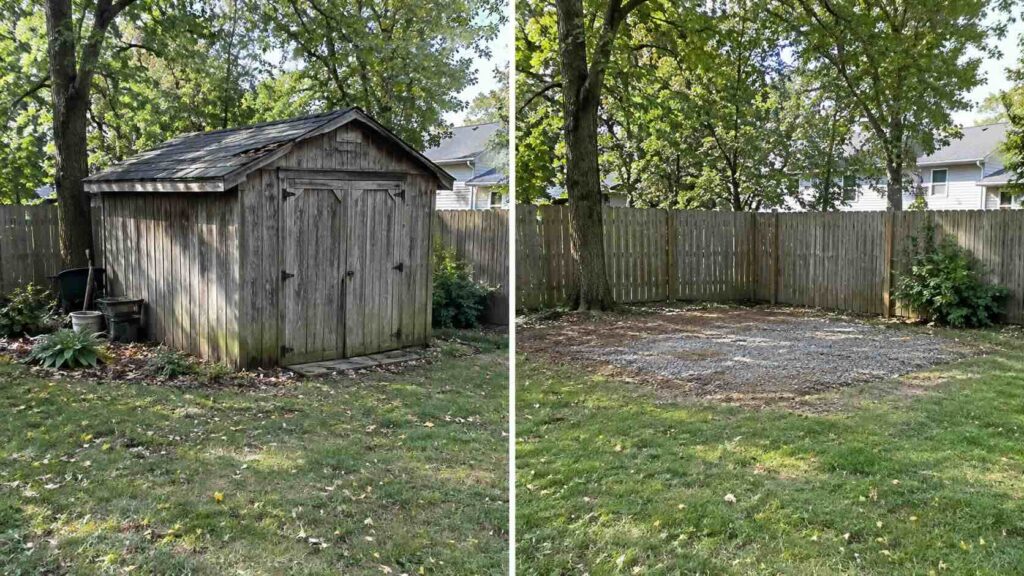
Shed removal services in Central Maryland help homeowners reclaim outdoor space when an old storage building becomes damaged, unsafe, unnecessary, or simply too difficult to manage. Maryland Pickers removes sheds throughout Central Maryland by handling the assessment, controlled dismantling, hauling, debris removal, and site cleanup that turn an unwanted backyard structure into a usable part of the property again.
A shed can fade into the background for years. It may start as a useful place for garden tools, bicycles, lawn equipment, holiday decorations, or spare household items. Then the roof begins to leak, the floor softens, one door comes off its hinges, and the space becomes less useful with every season. In some cases, a storm exposes the problem overnight. In others, a homeowner decides the shed is taking up space that would be better used for a patio, garden, play area, driveway expansion, or a new outdoor project.
For homeowners considering shed removal in Central Maryland, the project is usually about more than getting rid of an old building. It is about making a neglected part of the yard safer, cleaner, and more useful. We approach the job with that larger goal in mind, whether the shed is empty, filled with unwanted belongings, partially collapsed, or still standing but well past its useful life.
When an Old Shed Becomes a Problem
Most sheds do not fail all at once. They deteriorate gradually as weather, moisture, age, insects, ground movement, and neglected repairs take their toll. Central Maryland’s seasonal weather can be particularly hard on outdoor structures. Humid summers, heavy rain, snow, wind, freezing temperatures, and repeated thaw cycles can weaken roofing, siding, flooring, fasteners, and framing over time.
Homeowners often contact us for shed removal services in Central Maryland when they notice one or more warning signs:
- The shed has a leaking roof, missing shingles, rusted metal panels, or holes in the siding.
- The floor feels soft, uneven, rotted, or unsafe to walk on.
- Doors no longer close, walls lean, or the shed appears to be pulling away from its base.
- Storm damage has left the structure exposed, unstable, or partially collapsed.
- The building has become a storage area for broken tools, boxes, old furniture, yard debris, or unwanted household items.
- The homeowner is preparing the property for sale, a move, a renovation, or an estate cleanout.
- A new patio, garden, fence, play area, pool project, addition, or replacement shed requires the existing structure to be removed.
- The shed has become an attractive place for pests, moisture, mold, or unwanted debris to collect.
Shed removal in Central Maryland is often the practical next step when repairs would only delay an inevitable replacement or cleanup project. A shed with failing framing or roofing may look repairable from the outside, but hidden water damage can affect the floor, wall supports, roof decking, and areas around doors and windows.
A homeowner may also choose Central Maryland shed removal even when the structure is still technically usable. The building may be too small, poorly located, outdated, or no longer needed. Some homeowners inherit sheds after purchasing a property. Others discover an old storage building behind a garage, at the edge of a wooded lot, or beneath years of accumulated clutter. Removing it can give the yard a fresh start.
What Shed Removal Usually Involves
Professional shed removal services in Central Maryland involve more than tearing down a structure and leaving materials behind. We assess the building, account for access and safety concerns, remove the shed in a controlled way, load the debris, haul it away, and clean up the work area.
The exact process changes based on the shed’s size, materials, condition, contents, location, and foundation. Still, most projects follow a clear progression.
Inspection and planning
Shed removal begins with a look at the structure and the surrounding property. We consider the shed’s approximate dimensions, materials, visible condition, roof type, access route, interior contents, and proximity to fences, homes, garages, gardens, decks, utility lines, or neighboring property.
A small garden shed in an open backyard may be straightforward. A large wood-framed shed behind a narrow gate, next to a fence, filled with old belongings, and sitting on a slab requires a more detailed plan.
When you request shed removal services in Central Maryland, photos can help us understand the project before an on-site assessment. Exterior photos from several angles, interior images, pictures of the roof, and photos showing the route from the shed to the driveway are especially useful. If there is a gate, steep slope, retaining wall, narrow side yard, or nearby landscaping, include those details too.
A clear picture of the work area helps us prepare for the job safely and prevents surprises once the crew arrives.
Clearing the shed contents
Before we dismantle a shed, the interior needs to be addressed. Some customers empty the structure themselves and set aside everything they plan to keep. Others need unwanted contents removed along with the shed.
We can include shed cleanout and hauling as part of Central Maryland shed removal services when the building contains unwanted items. This may include shelving, boxes, damaged furniture, old tools, broken lawn equipment, scrap wood, bagged debris, gardening supplies, storage containers, construction materials, and other clutter.
Homeowners should remove anything they want to keep before removal day. This is especially important in sheds that have been used for years. Valuable tools, heirlooms, documents, seasonal items, spare keys, lawn equipment, hobby supplies, and family belongings can be buried beneath boxes or debris.
Let us know in advance if the shed contains paint, gasoline, propane cylinders, pesticides, batteries, chemicals, fuel containers, or other items that may require specialized handling. Advance notice allows us to determine the appropriate disposal plan and avoid unnecessary delays.
Identifying utilities and connections
Shed removal in Central Maryland requires extra care when a structure has electricity, lighting, outlets, water lines, internet cables, or other utility connections. A backyard workshop may have dedicated electrical service. A basic storage shed may have a buried cable, an old extension cord, or a light fixture installed by a previous homeowner.
Before demolition begins, homeowners should identify any known utility connections and ensure active services are safely disconnected when necessary. An electrician or other qualified professional may be needed to disconnect certain connections before our crew begins work.
Never assume an older shed has no power because a light does not turn on or because the building has not been used recently. Wiring can remain live even when it appears old, damaged, or disconnected. If you are unsure, mention it during the estimate process so the project can be planned appropriately.
Controlled dismantling or demolition
Once the shed is empty and utility concerns have been addressed, we begin the physical removal. The method depends on the type of shed and its condition.
A stable wood shed may be taken apart section by section. Doors, windows, shelving, trim, ramps, siding, roof materials, wall panels, framing, flooring, and hardware may be removed in a controlled sequence. A severely deteriorated shed may need a different approach because weakened walls, roof sections, or floorboards can shift without warning.
Metal sheds can involve sharp edges, rusted panels, and stubborn fasteners. Plastic or resin sheds may have brittle panels, damaged interlocking components, or ground anchors that need attention. Older prefabricated sheds may contain unexpected modifications, additional roofing layers, interior partitions, built-in workbenches, electrical outlets, or added storage sections.
Our light demolition services are designed for projects like this. We remove smaller structures and exterior features that require careful planning and physical labor but do not call for large-scale commercial demolition. Along with shed removal services in Central Maryland, this work can include decks, playsets, old outdoor structures, construction debris, and similar property-clearance projects.
Loading and hauling the debris
A dismantled shed creates more debris than many homeowners expect. A small building can produce stacks of lumber, roofing, siding, metal, screws, nails, flooring, insulation, windows, doors, shelves, anchors, and leftover contents.
The hauling phase is one reason homeowners choose professional shed removal in Central Maryland. We load the dismantled materials and unwanted items rather than leaving a pile in the driveway or yard. You do not need to rent a truck, arrange a trailer, make repeated disposal trips, or figure out how to transport bulky materials with exposed nails and sharp edges.
Maryland Pickers provides junk removal and hauling services in the region, so shed debris can be addressed as part of a complete cleanup. The crew handles the heavy lifting and removes the materials generated by the project.
Site cleanup after removal
The final stage of shed removal services in Central Maryland is general site cleanup. After the structure and debris have been removed, we collect loose material from the work area and leave the site clear of the dismantled shed.
What remains under the shed depends on how it was built. Some sheds sit directly on the ground, skids, concrete blocks, gravel, pavers, or a wood platform. Others are anchored to a concrete slab or foundation. The shed may come down completely while a usable slab remains in place for a future building, patio feature, or storage area.
We discuss the requested scope before the work begins so you know whether the project includes only the shed or also includes items such as blocks, wood runners, visible anchors, loose base material, ramps, or other attached components.
Common Types of Sheds That May Need Removal
Central Maryland shed removal projects involve many kinds of storage buildings. Each material and condition presents different challenges, which is why we assess the structure before deciding how to proceed.
Wood sheds
Wooden sheds are common on older residential properties throughout the area. They may have wood framing, plywood siding, board-and-batten siding, shingle roofs, wood floors, windows, and traditional hinged doors.
Water damage is a frequent issue with wood sheds. Moisture can enter through damaged shingles, cracked siding, failed caulking, open seams, or poor drainage around the base. Over time, rot may develop in the floor, bottom framing, roof decking, wall studs, door frames, and sections of siding close to the ground.
A shed can look intact from the outside while its floor or framing has become unsafe. When wood has softened or structural components have deteriorated, entering the shed or attempting to dismantle it without the right approach can create unnecessary risk.
Metal sheds
Metal sheds are durable in some conditions, but age and weather eventually affect the panels, hardware, roof, and anchors. Rust can weaken metal, sharp edges can develop where panels have bent or broken, and fasteners may become difficult to remove.
A metal shed may also be anchored to a slab, pavers, wood base, or ground-mounted system. Those connections need to be considered during the removal plan. We account for the shed’s location, stability, access, and anchoring before beginning the work.
Plastic, resin, and vinyl sheds
Plastic and resin sheds are often selected because they require less maintenance than traditional wood structures. However, they can crack, warp, become brittle from sun exposure, suffer storm damage, or develop door and panel problems after years outdoors.
These sheds can still be full of heavy stored items, shelving, anchors, flooring, and debris. Shed removal services in Central Maryland for resin or plastic structures involve more than simply breaking down panels. The building must be emptied, dismantled safely, hauled away, and cleaned up from the surrounding property.
Prefabricated and kit sheds
Many backyard sheds arrive as kits or prefabricated structures. They may combine wood, metal, plastic, composite panels, roofing materials, flooring, and hardware. Over time, homeowners may add shelving, ramps, interior walls, electrical outlets, storage lofts, extra roof layers, or attached lean-tos.
These modifications can change what appears to be a simple removal project. A proper inspection helps identify the building’s actual construction and any added features that need to be removed or worked around.
Garden sheds and compact storage buildings
Garden sheds and small storage buildings are often placed in difficult-to-reach areas. They may sit beside a property line, behind a garage, near landscaping, between fences, or at the back of a narrow yard.
Their smaller size does not always make them easy to remove. Limited access, close quarters, garden beds, trees, retaining walls, patios, and fences can all affect the plan. Central Maryland shed removal often requires careful material handling so the work can be completed without treating the entire yard as a demolition zone.
Storm-damaged and collapsed sheds
A partially collapsed shed deserves special attention. Roof sections may be resting on weakened walls. Broken framing, wet materials, sharp hardware, and damaged contents can create hazards throughout the area. A storm can also leave panels loose, siding hanging, windows broken, and fasteners exposed.
If the structure has collapsed or appears unstable, keep people and pets away from it. Avoid climbing on the roof, pulling on loose walls, or entering the shed to retrieve items until its condition has been evaluated.
Factors That Affect Shed Removal in Central Maryland
No two properties are exactly alike. The scope of a shed removal project depends on the structure, the surrounding site, and the homeowner’s intended outcome for the space.
Shed size, height, and layout
The footprint of the shed is important, but so are its height and interior configuration. A small tool shed requires a different approach than a larger workshop, multi-door outbuilding, lofted storage shed, or building with attached sections.
Built-in shelves, cabinets, workbenches, lofts, ramps, porches, lean-tos, partitions, and additions can increase the amount of material involved. A taller structure with a steep roof or elevated platform may also require more careful dismantling than a low-profile shed.
Building materials
Wood, metal, roofing, plastic, composite panels, insulation, flooring, glass, hardware, and old repairs all influence the removal process. Many older sheds contain multiple materials because they have been repaired or altered over time.
For example, a building that looks like a basic wood shed from outside may have a metal roof, concrete anchors, multiple flooring layers, interior wall panels, added electrical fixtures, and a workbench fastened directly to the framing.
Structural condition
Condition is one of the most important variables in shed removal services in Central Maryland. A sound shed can usually be taken apart in an orderly sequence. A rotted, leaning, water-damaged, storm-damaged, or collapsed shed requires added care.
Weak floors, compromised roof framing, unstable walls, and loose materials can change how our crew approaches the job. We assess the shed as it exists rather than assuming that all structures can be removed in the same way.
Access through the property
Access affects both safety and efficiency. Some sheds are close to the driveway, with a wide and level path for hauling. Others are located behind narrow gates, through side yards, on slopes, around landscaping, or near outdoor features that need protection.
We consider access details such as:
- Gate width and height
- Fence placement and condition
- Distance from the shed to the driveway
- Parking availability for the truck and crew
- Steps, hills, uneven ground, and retaining walls
- Low branches and overhead obstructions
- Nearby pools, decks, patios, gardens, or outdoor furniture
- Existing landscaping and irrigation features
- Obstacles in the hauling path
A tight or complicated backyard does not automatically prevent Central Maryland shed removal. It simply means we need accurate details before the work begins.
Interior contents and clutter
A shed filled with unwanted property requires a different plan than an empty one. Stored belongings can add labor, debris volume, and safety concerns. Shelves may be overloaded, boxes may have deteriorated, and sharp or heavy materials may be buried beneath clutter.
Before shed removal, separate what you want to keep from what should go. If you need help clearing out the shed, tell us in advance so we can include it in the assessment.
Electrical, water, and other connections
A shed with electrical service, outlets, lighting, water, drainage, communications lines, or other connections must be handled differently than a basic storage structure. Utility connections can affect the order of work and may need to be disconnected before demolition begins.
If you do not know whether the shed has live wiring, buried lines, or plumbing, mention that uncertainty. It is better to identify possible concerns during planning than to discover them after work has started.
Fences, landscaping, and nearby structures
Many sheds are tucked into corners of the property, close to fences, garages, homes, trees, gardens, patios, sheds on neighboring lots, or outdoor equipment. That placement shapes how materials can be removed and where debris can be temporarily staged.
We plan around nearby property features that need to remain in place. This is particularly important when a shed stands beside a newly installed fence, mature landscaping, a garden bed, pool enclosure, or home exterior.
Slabs, foundations, and anchors
The structure above ground and the base below it are often separate considerations. A shed may sit on a concrete slab, blocks, wood skids, gravel, pavers, a platform, or ground anchors.
Before scheduling shed removal in Central Maryland, consider what you want the area to look like afterward:
- Remove the shed while leaving a usable concrete slab or pad.
- Remove the shed and take away blocks, skids, visible anchors, or loose materials.
- Clear the structure so a replacement shed can be installed.
- Remove the shed to make room for landscaping, grass, a garden, a patio, or another outdoor feature.
- Discuss whether a slab, foundation, or extensive base removal is part of the requested project.
A concrete slab may be useful for a replacement shed, storage space, seating area, or future project. In other situations, the homeowner wants the site cleared as fully as possible. We can evaluate the requested work and explain the practical options.
How Homeowners Can Prepare
Preparing for shed removal services in Central Maryland does not need to be complicated, but a few steps can make the project safer and more efficient.
Remove items you plan to keep
Sort through the shed before the scheduled appointment and take out anything you want to keep. Check shelves, lofts, cabinets, corners, and areas beneath boxes or debris. Set aside tools, lawn equipment, documents, spare keys, sentimental items, decorations, collectibles, bicycles, and building materials you may want later.
If you cannot clear the shed yourself, describe the contents when requesting an estimate. We can determine whether shed cleanout and hauling should be included.
Identify utility connections
Tell us about any electrical service, lights, outlets, water lines, cables, security equipment, or other connections. If you do not know whether utilities are present, say so during the estimate process.
When necessary, arrange for active service to be disconnected by the appropriate qualified professional before the scheduled shed demolition.
Create a practical access route
Unlock gates and clear the path from the shed to the driveway or loading area. Move vehicles, patio furniture, grills, hoses, garden tools, planters, toys, and other obstacles that could interfere with safe access.
If possible, move fragile or valuable outdoor items away from the immediate work area. This gives the crew room to remove materials while helping protect nearby property features.
Keep pets and children away from the work area
Shed removal involves tools, demolition activity, hauling, sharp materials, and temporary foot traffic through the yard. Keep pets indoors or securely away from the work zone. Make sure children understand that they should not enter the area while the shed is being dismantled or debris is being loaded.
Send useful photos and details
Good information helps us prepare for your specific shed removal project in Central Maryland. When contacting us, share:
- Approximate shed dimensions
- Photos of all sides of the shed
- Photos of the interior and roof, if safely accessible
- Whether the shed is empty, partly full, or packed with contents
- The shed’s materials, if known
- Visible damage, leaks, rot, or storm damage
- Any known electrical or utility connections
- Information about the foundation, slab, ramp, or anchors
- Photos of gates, side yards, fences, slopes, and the driveway
- Your intended use for the space after removal
Why Professional Shed Removal Is Safer
An old shed can make demolition look deceptively simple. Homeowners may see a small structure and imagine that a hammer, pry bar, truck, and free weekend will solve the problem. The difficulty often appears after the first wall, roof section, or damaged floorboard starts to move.
Professional shed removal in Central Maryland reduces the burden of managing unstable materials, heavy lifting, sharp debris, hauling, and disposal on your own. Our crew uses a planned approach based on the building’s condition and surroundings.
Unstable framing and weakened walls
Rotten wood, damaged framing, loose siding, failing roof supports, and weakened floors can create unpredictable conditions. Removing one component may change the stability of the remaining structure. We work in a controlled sequence instead of taking apart random sections and hoping the building stays where it is.
Heavy roofing and difficult materials
Roofing materials are often heavier and more awkward than they look. Shingles, sheathing, metal panels, framing, and wet or damaged materials require careful handling. A shed roof that has absorbed water or suffered storm damage can be especially difficult to manage.
Sharp fasteners and hidden hazards
Nails, screws, staples, hinges, broken glass, wire, sharp metal edges, and damaged hardware are common in old sheds. Once demolition begins, those hazards can spread through the work area and become difficult to see beneath debris.
Our shed removal services include loading and hauling the materials rather than leaving loose boards, roofing, metal, and fasteners behind for the homeowner to manage.
Hidden concerns inside older sheds
Some aging sheds may contain mold, pest activity, animal waste, damaged insulation, deteriorated paint, or materials that require added caution. If there is a reason to suspect a hazardous material, routine demolition may not be the right first step.
We can identify visible concerns during the assessment and discuss the appropriate path forward. Specialized testing, remediation, or disposal may be necessary in some situations.
Proper debris handling and disposal
Shed removal is not finished when the structure comes down. The debris still needs to be gathered, loaded, transported, and handled responsibly. Wood, metal, plastic, roofing, hardware, old contents, cardboard, and construction debris may all be part of the final load.
Maryland Pickers prioritizes donation and recycling whenever practical, then uses responsible disposal for materials that cannot be reused or recycled. This keeps the project focused on clearing the property rather than transferring the cleanup burden somewhere else on the property.
Shed Removal Service Area
Maryland Pickers provides shed removal services in Central Maryland for homeowners and businesses in Harford County, Baltimore County, and Cecil County. We also serve nearby communities where scheduling, access, and project conditions allow.
Our service area includes residential properties where an old shed needs to be removed before a sale, renovation, move, property cleanup, landscaping project, or outdoor improvement. Central Maryland shed removal may also be combined with junk removal, hauling, light demolition, construction debris removal, deck removal, playset removal, or broader property cleanout services when those needs are part of the same project.
Every shed removal project starts with the property itself. A small backyard shed, a deteriorated workshop, a storm-damaged metal building, and a storage shed filled with unwanted items all need different preparation and planning. We assess the structure, access, contents, and requested scope so homeowners have a clear understanding of the work involved.
Request an Estimate
If you need shed removal services in Central Maryland, Maryland Pickers can evaluate the building, access route, contents, utilities, and site conditions before developing a location-specific plan. Share photos and details about the shed, including its condition, approximate size, foundation, interior contents, and any known electrical or utility connections.
Whether the goal is to remove a damaged storage shed, clear a backyard for a new project, haul away an old outbuilding, or deal with a structure that has become unsafe, we can help assess the next practical step.
FAQs: What customers throughout central Maryland ask us about shed removal services
What is included with shed removal services in Central Maryland?
We assess the shed, plan for safe access, dismantle or remove the structure, load the debris, haul it away, and perform a general cleanup of the work area. If the shed contains unwanted belongings, we can evaluate the cleanout and hauling needs as part of the project.
Do I need to empty a shed before Central Maryland shed removal?
Remove all belongings you want to keep before the appointment. If the shed contains unwanted boxes, tools, shelves, furniture, yard equipment, construction materials, or debris, tell us before scheduling so we can include cleanout and hauling in the assessment.
Can you remove a damaged, leaning, or collapsed shed?
Yes. Shed removal in Central Maryland can include structures affected by rot, water damage, storms, leaning walls, damaged roofs, or partial collapse. We evaluate the structure’s stability and use a controlled approach based on its condition.
Will shed removal include the concrete slab or foundation?
The shed and its base are evaluated separately. We can remove the shed while leaving a slab or pad in place, or assess components such as blocks, wood skids, ramps, visible anchors, and loose base material. Tell us whether you plan to reuse the site or want to clear it for another purpose.
What should I do if the shed has electricity or utility connections?
Tell us before the removal appointment. Active electrical, water, or other utility connections need to be identified and safely disconnected by the appropriate qualified professional before demolition begins. If you are not sure whether the shed has live wiring or buried connections, mention that during the assessment.