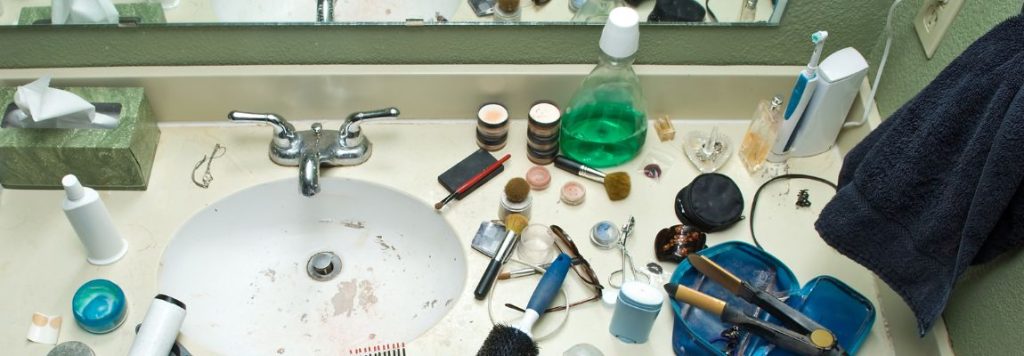
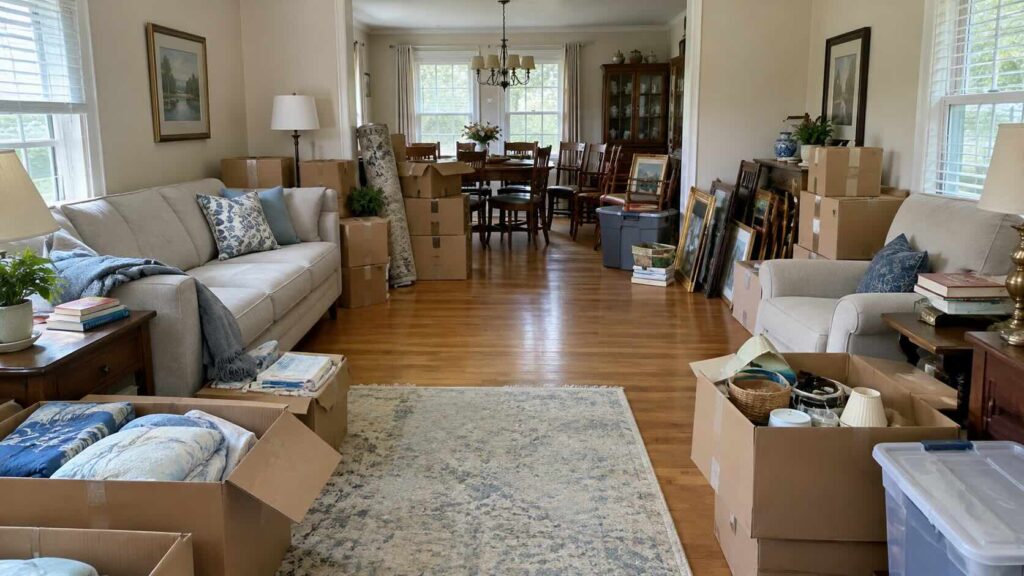
Junk removal for downsizing in Central Maryland is rarely just a matter of moving fewer boxes. It often means sorting through decades of furniture, household goods, family belongings, tools, seasonal decorations, storage bins, and items that made sense in one stage of life but no longer fit the next one.
Maryland Pickers provides downsizing junk removal in Central Maryland for homeowners, families, seniors, estate representatives, and anyone preparing a home for a move, sale, transition, or simpler way of living. We handle the physical work of removing unwanted items after you decide what stays, what goes to family, what may be donated, and what is ready to leave the property.
Whether you are moving from a longtime home into a smaller house, condominium, apartment, retirement community, or assisted-living setting, a thoughtful cleanout can make the transition more manageable. The goal is not to rush decisions or treat personal belongings like ordinary trash. The goal is to create room, reduce the burden of moving, and make the next step easier to handle.
What Downsizing Junk Removal Means in central Maryland
Downsizing junk removal is a full-service way to remove unwanted household items when homes in Central Maryland contain more belongings than will fit, serve a purpose, or make sense in the next living situation.
A downsizing project may involve a few large items, such as a dining room set, extra bedroom furniture, mattresses, appliances, or exercise equipment. It may also involve an entire house with a packed basement, garage, attic, shed, storage room, and years of accumulated belongings.
Our crew removes items from where they are located. You do not need to drag furniture to the curb, carry boxes up from the basement, load a rental truck, or make repeated disposal trips. Once you show us what should be removed and approve the estimate, we handle the lifting, loading, hauling, and cleanup.
For many households, downsizing happens alongside major life changes. It may follow retirement, the sale of a family home, the passing of a loved one, a move closer to relatives, a health-related transition, or a decision to reduce maintenance and simplify daily life. Those circumstances can make the work feel more personal than a typical cleanout.
That is why it helps to separate the project into two parts:
- You make the decisions about belongings, memories, documents, and valuables.
- We take care of the labor required to remove the items you have decided not to keep.
This approach keeps you in control while eliminating the most physically demanding part of the process.
When Professional Removal Helps Most
A smaller home does not automatically require a complete cleanout. Some people need to remove only a few oversized items before moving. Others need to reduce the contents of a multi-level house before listing it for sale.
Professional junk removal for downsizing in Central Maryland is especially useful when the amount of work exceeds what one person, a family member, or a personal vehicle can reasonably handle.
You Are Moving Into a Smaller Home
A move from a large single-family home to a smaller property often reveals how much furniture and storage has accumulated over time. A formal dining room set may not fit the new layout. Guest-room furniture may no longer be needed. A second refrigerator, chest freezer, spare television, old filing cabinet, or unused shelving unit may take up space without adding value to the next home.
Removing those items before the move can reduce the number of belongings that must be packed, transported, unpacked, and stored. It also lets you focus on choosing the items that genuinely support your next chapter.
You Are Helping a Parent or Relative Downsize
Adult children often take on a major role when a parent or relative needs to move. The work can be complicated by tight timelines, distance, family schedules, emotional decisions, and a house full of possessions that may have been untouched for years.
A professional downsizing cleanout gives the family time to review important belongings without also having to manage furniture moving, appliance removal, truck rentals, disposal rules, and heavy lifting.
Before scheduling removal, family members should look carefully for:
- Legal and financial documents
- Tax records, insurance papers, and property files
- Family photographs, albums, letters, and heirlooms
- Jewelry, coins, collectibles, and valuables
- Keys, spare keys, remotes, and garage-door openers
- Firearms, ammunition, and items needing specialized handling
- Laptops, hard drives, phones, and devices containing personal data
- Items that relatives want to keep, sell, or donate
Once those items are identified, we can remove the belongings that are no longer needed without adding another difficult task to the family’s list.
You Are Preparing a House for Sale
A crowded home can make rooms appear smaller and prevent buyers from seeing how the property functions. Full closets, packed garages, basement storage piles, extra furniture, and unfinished projects can also distract from the home itself.
Downsizing junk removal can help prepare a property in Central Maryland for photographs, showings, repairs, staging, inspections, or a real estate listing. Clearing unnecessary items creates access for painters, contractors, cleaners, real estate professionals, and prospective buyers.
Start earlier than you think you need to. A cleanout often reveals small repairs, paint touch-ups, flooring needs, moisture issues, or organization projects that are easier to address once the space is clear.
You Are Handling an Estate Transition
Estate cleanouts require patience. A home may contain practical items, sentimental belongings, inherited furniture, workshop tools, old paperwork, holiday decorations, household collections, and storage boxes that no one has opened in years.
No one should feel pressured to make every decision in one day. Families often benefit from setting aside a review area for uncertain items and allowing relatives time to identify keepsakes before unwanted material is removed.
After the family has made those decisions, we can help clear furniture, appliances, boxes, mattresses, household clutter, basement contents, garage items, and other materials that remain. A cleanout may cover one room, an entire home, or a combination of the house, garage, attic, basement, shed, and storage unit.
You Need to Make a Home Safer and Easier to Manage
Clutter is not always simply inconvenient. Stacks of boxes, blocked hallways, overloaded rooms, crowded stairs, and furniture that no longer has a purpose can make daily life more difficult. Clearing extra belongings can improve access to closets, bedrooms, garages, basements, utility areas, and walkways.
For senior downsizing, the most useful changes are often practical:
- Opening clear pathways through rooms
- Removing furniture that blocks movement
- Making closets and storage areas easier to reach
- Clearing stairs, landings, and entryways
- Reducing tripping hazards from boxes, cords, and loose items
- Making room for mobility equipment, caregivers, or home modifications
- Reducing the physical burden of maintaining a larger home
A thoughtful cleanout is not about making a house empty. It is about keeping the belongings that matter while letting go of items that create unnecessary work, risk, or stress.
Areas of the Home to Address
Downsizing rarely happens in one room. The most successful projects usually begin with an honest look at every storage area, including the places where belongings tend to accumulate quietly over time.
Garage Cleanouts
Garages often become permanent holding spaces for items that no longer fit inside the home. Old furniture, broken appliances, holiday decorations, tools, sporting goods, bicycles, leftover renovation materials, cardboard boxes, lawn equipment, and unused shelving can quickly consume the available floor space.
A garage cleanout can make room for vehicles, a workshop, lawn and garden supplies, or organized storage. It can also prevent unwanted items from being moved to the next home simply because no one had time to deal with them before moving day.
Before a garage cleanout, look through toolboxes, cabinets, drawers, workbenches, and storage bins. These areas may contain keys, family records, collectibles, small tools, hardware, photographs, or items intended for relatives.
Basement Cleanouts
Basements in Central Maryland homes often hold the most difficult downsizing decisions when it comes to junk removal because they serve as long-term storage areas. A basement may contain old furniture, workout equipment, children’s items, holiday decorations, outdated electronics, extra appliances, books, old carpet, shelving, renovation leftovers, and stacks of boxes from previous moves.
Basement junk removal can be especially helpful when stairs, low ceilings, narrow hallways, or heavy furniture make the project physically demanding. We remove unwanted items from the basement, carry them out, load the truck, and sweep the cleared work area afterward.
A clear basement also helps homeowners identify moisture problems, water damage, foundation concerns, outdated storage methods, or maintenance issues that were hidden behind belongings.
Attics, Crawl Spaces, and Storage Rooms
These spaces often contain lightweight but high-volume materials: boxes, seasonal décor, old clothing, children’s belongings, household supplies, books, luggage, and stored furniture. They can be difficult to access and easy to postpone.
When downsizing, do not assume every stored item must move with you. Ask practical questions:
- Have I used this within the last year or two?
- Will it fit in the new home?
- Does it support the life I expect to have there?
- Is it worth the cost and effort of packing, moving, and storing?
- Would another family member benefit from it now?
- Is it broken, outdated, incomplete, or simply no longer useful?
The answers make it easier to decide which items are worth keeping and which ones are ready for removal.
Bedrooms, Living Areas, and Dining Rooms
Large furniture can create immediate downsizing challenges. A sectional sofa, china cabinet, oversized dining set, guest-room suite, entertainment center, bulky recliner, or extra bed may not work in a smaller home.
Measure the rooms, doorways, closets, and storage areas in the new property before deciding what to bring. It is easier to remove furniture before the move than to pay to transport it only to discover that it does not fit.
Sheds and Outdoor Areas
Sheds, patios, decks, and backyard areas can hold broken lawn equipment, old outdoor furniture, unused playsets, damaged tools, construction materials, yard debris, and equipment that has not been used in years.
Outdoor items often require more time than expected because they may be dirty, rusted, damp, oversized, or tucked behind other materials. A cleanout can help prepare the property for sale, reduce outdoor clutter, and make a move more manageable.
A Better Way to Sort Before Downsizing
A successful downsizing project does not require you to make hundreds of decisions at once. Work in small sections and give every item a clear destination.
A simple four-category system can make the process more manageable:
- Keep: Items you need, use, love, or have already planned to bring to the next home.
- Give: Belongings intended for relatives, friends, or charitable donation.
- Review: Items that need more time, research, family input, or a final decision.
- Remove: Broken, worn-out, duplicated, outdated, unwanted, or unusable items ready for hauling.
The review category matters. Many people get stuck because they treat every item as an immediate yes-or-no decision. A separate review area allows you to keep moving without accidentally discarding something important or allowing uncertainty to stop the entire project.
Start With Easier Decisions
Begin with items that have little emotional weight: expired household goods, broken furniture, damaged décor, duplicate kitchen items, outdated electronics, worn mattresses, unused exercise equipment, empty boxes, old magazines, packaging, and leftover renovation materials.
Those early decisions create visible progress. They also make it easier to reach the items that deserve more time and attention.
Decide What Fits the Next Home
Downsizing works best when you plan around the new home rather than trying to force the old home’s contents into a smaller space.
Measure the rooms where you expect furniture to go. Think about closet space, kitchen storage, garage access, basement availability, stairs, elevators, and whether you will have a shed, attic, or storage unit. If an item will not fit physically or will make the new home harder to use, it may be better to let it go before the move.
Label What Stays
When a home contains a mix of removal items and belongings you intend to keep, clear labeling is essential. You can use painter’s tape, sticky notes, signs, colored labels, or designated areas.
Keep-items can go in one room, against one wall, or in a marked section of the garage. Removal items can be grouped separately. The system does not need to be elaborate. It simply needs to make your instructions clear on cleanout day.
Protect Important Items Before the Crew Arrives
Move valuable, personal, and irreplaceable belongings away from the removal area whenever possible. This includes documents, jewelry, medication, family photographs, heirlooms, keys, cash, personal electronics, and items intended for relatives.
If you cannot move those items, point them out during the walkthrough. Clear communication protects what matters and allows our crew to work efficiently.
What We Can clean out During a Downsizing junk removal project in your central maryland property
Maryland Pickers handles a wide range of common residential items during downsizing junk removal projects in Central Maryland. Every home is different, and a typical load may include a mixture of bulky furniture, bagged clutter, boxes, appliances, electronics, renovation debris, and household materials.
Common removal items include:
- Sofas, recliners, chairs, tables, desks, dressers, bookcases, cabinets, and bed frames
- Mattresses, box springs, headboards, and bedroom furniture
- Dining room furniture and entertainment centers
- Refrigerators, freezers, washers, dryers, microwaves, and other appliances
- Televisions, computer monitors, printers, electronics, and household devices
- Exercise equipment, treadmills, stationary bikes, and weights
- Storage bins, cardboard boxes, bagged clutter, books, and general household items
- Old carpet, rugs, flooring, cabinets, doors, and renovation debris
- Lawn equipment, bicycles, sporting goods, and outdoor furniture
- Shelving, workbenches, non-built-in cabinets, and garage contents
- Construction materials, bulk trash, and debris from home projects
- Items from basements, attics, garages, crawl spaces, sheds, and storage units
Our oversized trucks are 20 feet long, 8 feet wide, and 5 feet high. One full truck load is equivalent to roughly eight pickup-truck loads, which can make a substantial difference during a larger household downsizing project.
Some materials require separate or specialized handling. Do not place gasoline, motor oil, antifreeze, paint, solvents, pesticides, propane tanks, pool chemicals, medical waste, fireworks, ammunition, or unknown chemicals into the removal area without discussing them first. If you are unsure about an item, ask before the appointment so we can help determine the appropriate plan.
How Our Downsizing Service Works
We keep the process straightforward so you know what to expect before anything leaves your property.
Request a Free Estimate
You can schedule online or call us to arrange a free, no-obligation estimate. When you contact us, share the general scope of the project. Let us know whether the work involves a few large items, a garage, basement, attic, storage unit, estate property, or a whole-home cleanout.
You do not need a perfect inventory. A general description of the rooms involved, the types of items, and any access concerns is enough to begin.
We Call Before Arrival
On appointment day, we call approximately 30 minutes before the scheduled arrival window. This gives you time to unlock gates, move vehicles if necessary, secure pets, open the garage, and prepare for the walkthrough.
We Review the Items With You
When we arrive, show us what should remain and what should be removed. This is the time to point out special instructions, fragile areas, narrow staircases, long carrying distances, basement entrances, or any items that require extra attention.
We assess the volume of material and provide an all-inclusive quote before work begins. You can review the price and decide whether to proceed.
We Handle the Heavy Work
After you approve the estimate, our team handles the lifting, carrying, loading, and hauling. You do not need to move items to the curb, rent a dumpster, borrow a pickup truck, or recruit friends to help carry a sofa down the stairs.
We remove items from the rooms, garage, attic, basement, shed, or storage area where they are located. When the work is complete, we sweep the cleared area.
Payment Follows Completion
Payment is collected once the job is finished. We accept cash, credit cards, debit cards, and checks.
What Affects Downsizing Junk Removal Costs?
The primary factor in a junk removal quote is the amount of truck space your unwanted items occupy. A small load of boxes and a few furniture pieces will require less truck capacity than a full household cleanout involving appliances, furniture, basement storage, garage contents, and renovation debris.
Other factors that can influence the scope of the work include:
- The total volume of material being removed
- The number of large, heavy, or awkward items
- Whether items are loose, boxed, bagged, stacked, or disassembled
- The distance from the items to the truck
- Stairs, elevators, narrow hallways, or limited access
- Whether the job includes multiple areas of the property
- The mix of furniture, appliances, electronics, carpet, and construction debris
- Special handling needs for unusually heavy or restricted items
An on-site estimate provides the clearest price because it reflects the actual contents of the property. You will receive the quote before removal begins, not after the truck has been loaded.
Downsizing Throughout Central Maryland
Maryland Pickers serves households throughout Harford County, Baltimore County, and Cecil County. Our service area includes communities such as Bel Air, Aberdeen, Havre de Grace, Edgewood, Fallston, Forest Hill, Towson, Catonsville, Pikesville, Essex, Dundalk, Parkville, Owings Mills, Elkton, North East, Perryville, Rising Sun, and Port Deposit.
Downsizing junk removal in Central Maryland often involves a mix of local housing styles and practical access issues. Some projects take place in older homes with narrow stairways and packed basements. Others involve suburban garages, detached sheds, townhomes, apartment moves, retirement-community transitions, or inherited properties that need to be cleared before sale.
The details differ from home to home, but the process remains the same: you identify what matters, separate what stays, and let us remove what no longer needs to take up space.
FAQs: downsizing junk removal questions our central maryland customers ask
How does downsizing junk removal in Central Maryland work?
We begin with an on-site review of the items you want removed. Our crew provides an all-inclusive quote based primarily on the truck space required. After you approve the quote, we remove the items from inside the home, garage, basement, attic, shed, or storage area, load them into our truck, haul them away, and sweep the cleared work area.
You do not need to carry items outside or place them at the curb.
What should I do before hiring a junk removal company for downsizing?
Review boxes, drawers, cabinets, closets, filing areas, tool chests, and storage bins for documents, photographs, jewelry, keys, heirlooms, financial records, medication, personal devices, and valuables. Separate items you are keeping or giving to family from items you want removed.
You do not need to organize every room perfectly. Clear labels or designated keep and remove areas are usually enough for us to understand your instructions.
Can Maryland Pickers remove furniture, appliances, and boxes in the same visit?
Yes. A downsizing cleanout can include mixed household items such as furniture, mattresses, appliances, electronics, storage boxes, shelving, carpet, exercise equipment, garage contents, and general clutter. Let us know before the appointment if the project includes unusually heavy, hazardous, or restricted materials so we can plan appropriately.
How much does junk removal cost for downsizing in Central Maryland?
We base pricing mainly on the amount of space your unwanted items occupy in our truck. The total can also be affected by heavy furniture, appliances, stairs, long carrying distances, difficult access, and the number of areas being cleared.
We assess the project in person and provide an all-inclusive quote before work begins. You can review the price before deciding whether to move forward.
Can you help with a whole-house downsizing or estate cleanout?
Yes. We handle projects ranging from single-item removal to large cleanouts involving the entire home, basement, garage, attic, shed, storage areas, and outdoor spaces. For estate-related projects, families should first take time to identify documents, keepsakes, valuables, and items intended for relatives.